
On the first of February 2019, exactly one century passed since today's Chamber of Commerce and Industry of Vojvodina, along with its predecessors whose tradition it inherits, has continuously existed and operated. One century represents a measure of elapsed time that can reliably judge the durability and value of someone's role and place in the activity they engage in and the environment in which they work. The completed century of existence of the Chamber of Commerce and Industry of Vojvodina certainly is a historical period that vividly presents the significance of this economic institution through the turbulent decades of the previous century, so laden with major historical fractures and sudden social changes.
From the appearance of the first brotherhoods in the territories of the South Slavs, recorded in the Republic of Ragusa as early as the beginning of the 13th century, whose influence spread through the establishment of Ragusan trade colonies in the cities of Serbia and Southern Hungary, through the appearance of trade and craft guilds in almost all major settlements where the Serbian people lived in the area across the Sava and Danube, to the appearance of the first trade, industrial, and craft chambers in these areas, there was a constant tendency of members of related activities to unite in order to more easily and successfully protect their interests and realize their rights and goals.
With the establishment of the first trade, industrial, and craft chambers in the territories of the Habsburg Monarchy in the middle of the 19th century, which arose on the trail and tradition of the chamber system established in France back in the second half of the 17th century, their institutionalization as institutions of state economic policy occurred. For the area of Vojvodina, the first such chamber was established in Timisoara in 1850, and its jurisdiction applied to the entire area of the then Vojvodship of Serbia and Banat of Temeschwar, as a separate administrative unit of the great empire, from 1849 to 1861. After the abolition of the Vojvodship of Serbia (1861) and following the Austro-Hungarian Compromise (1867), three trade and industrial chambers had jurisdiction over the territory of today's Vojvodina: in Szeged for the area of Bačka, in Timisoara for the area of Banat, and in Osijek for the area of Srem. In a number of Vojvodina cities (Novi Sad, Subotica, Sombor, Veliki Bečkerek, Pančevo, Kikinda, etc.), at the end of the 19th century, there were branches of these chambers, headed by local boards. Such a chamber system, which gathered merchants, industrialists, artisans, and farmers, and united their interests, enabling them to have better mutual connections and a more successful business environment, was in force until the end of the First World War and the collapse of Austria-Hungary in 1918.
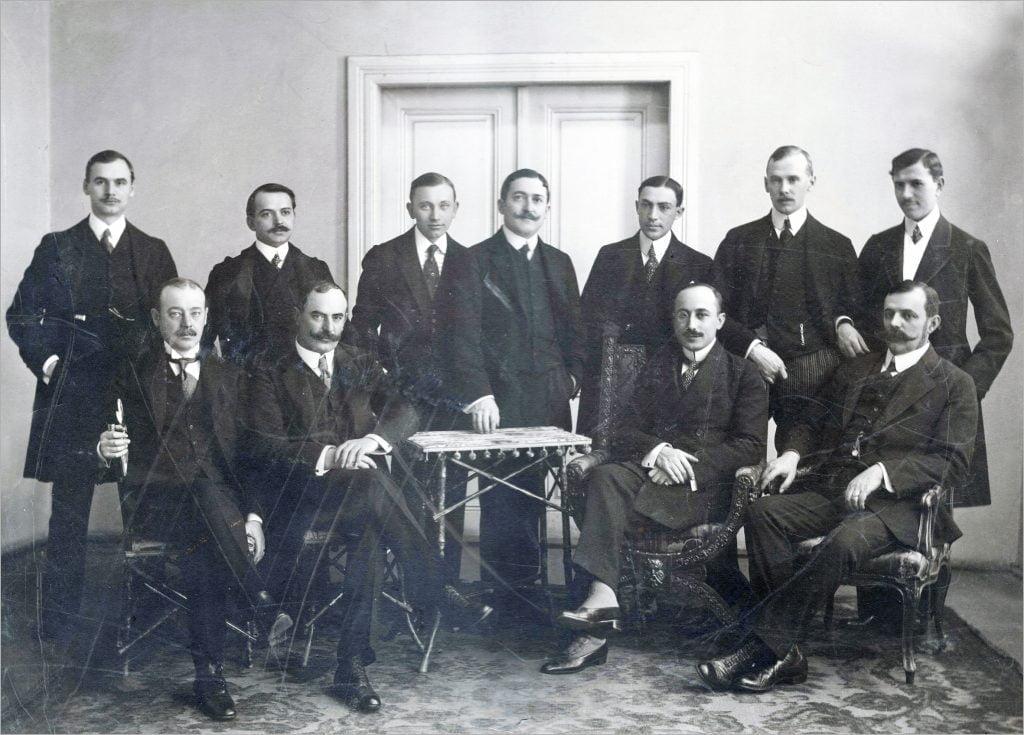
After the accession of Vojvodina to Serbia at the end of November 1918 and immediately thereafter the creation of the first common state of the South Slavs – the Kingdom of Serbs Croats and Slovenes the need arose to establish trade and industrial chambers. For the area of Vojvodina where traditionally highly developed sectors of trade and craft existed as well as industry which was for the most part still in its infancy (yet after Slovenia still the most developed in the territory of the new state) two economic chambers were soon established that would in a similar manner attempt to unify and protect the interests of their membership.
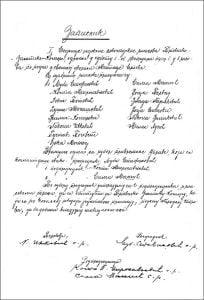
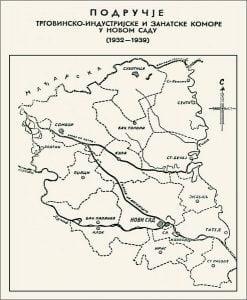
The direct precursor of today's Chamber of Commerce of Vojvodina was the Trade and Craft Chamber in Novi Sad established on February 1 1919 whose jurisdiction initially extended only to the area of Bačka then also to a part of Srem and for a time also to Baranja. From 1926 when the Association of Industrialists also joined it this chamber would bear the name Trade-Industrial and Craft Chamber in Novi Sad and it would exist under that name until the beginning of the Second World War. The Chamber of Commerce of Vojvodina also inherits the tradition of the Banat Trade-Industrial and Craft Chamber with its headquarters in Veliki Bečkerek (later Petrovgrad today Zrenjanin) which was established on January 22 1920 and had jurisdiction over the area of Banat. With the appearance of the Agricultural Chamber of the Danube Banovina (1939) the area of the chamber system was also expanded to agriculture as the most significant economic branch of Vojvodina and this chamber although short-lived is the third traditional stronghold of today's Chamber of Commerce of Vojvodina.
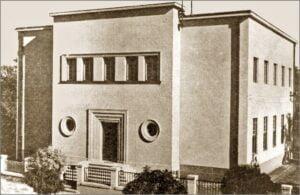
Between the two world wars these chambers would face numerous obstacles and difficulties in their operations but over time despite unstable political conditions and generally constant legal and economic uncertainty they would work increasingly successfully and in an organized manner for the benefit of their members. The main intention of the chambers was to influence legislation related to economic issues to enable their members easier economic cooperation with foreign countries to organize or assist in organizing events presenting the economic opportunities of the chamber members to help the education and training of new personnel within the economic branches practiced by their members to create business registers of their members resolve their disputes take care of the pension funds of the membership etc. By the end of the 1930s the chambers had become profitable institutions that enabled more active care for an already wide circle of their membership through a series of their own businesses.
The work of the Vojvodina chambers ceased during the occupation (1941-1944) and after the liberation for a short time longer it operated on the old foundations but already from 1946 the previous chamber system was replaced by a new one in the spirit of the ruling socialist ideology. Between 1946 and 1962 chambers were organized according to the branch principle (craft catering trade and agricultural chambers existed separately) and from 1962 with the establishment of the Provincial Chamber of Commerce a unified chamber system was established in the territory of AP Vojvodina. Since that time the Chamber had a greater influence on the economic environment and regulations but its role was constantly limited by the ideological frameworks of the ruling system. In 1974 the Provincial Chamber of Commerce was renamed the Chamber of Commerce of Vojvodina which during the period of the new constitutional system of the SFRY and emphasized Vojvodina autonomy (1974-1989) had an increasingly broad and growing significance in the organization of the entire economic life in the province. At this time PKV had a wide range of legal powers and thus dealt with the improvement of production trade and services increasing labor productivity the application of modern technical-technological procedures and rationalization in work and business improving the conditions and organization of work and business harmonizing construction reconstruction and utilization of capacities improving business and other association business-technical cooperation cooperation and specialization improving the placement of goods goods exchange ensuring the unity of the Yugoslav market
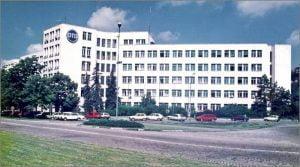
Following the breakup of the SFRY, the work of the Chamber of Commerce of Vojvodina during the last decade of the 20th century took place in a time of great trials (wars, sanctions, economic and political isolation, hyperinflation, the collapse of the common market, a visible decline in production and the general standard of living of citizens, the rise of the grey economy, etc.), and insufficiently clearly defined social changes and economic conditions, along with a lack of legal frameworks that would determine the place and jurisdiction of the chamber system. In a time of complete centralization, at the beginning of the 1990s, tendencies also arose for the Chamber of Commerce of Vojvodina to be abolished as an independent institution and to become merely part of a larger chamber system at the level of the Republic of Serbia, which nevertheless did not happen.
After the democratic changes in Serbia, from the autumn of 2000, the chamber system was legally defined, and the conditions of economic business became significantly more regular and stable, so the work of PKV could once again take place with a noticeably greater momentum and scope than during the previous decade. The significance of the Chamber in the time of privatization and transition of the Serbian and Vojvodina economy strengthened, and international cooperation and the re-establishment of business ties with the world and the region, after a period of multi-year isolation, became one of the primary activities of PKV, which strove to present the opportunities of the Vojvodina economy to potential partners as effectively as possible. To a significant extent, the Chamber also worked on the standardization of the local economy and its harmonization with the countries of the European Union, which represented the most significant business partner to the Vojvodina and Serbian economy in the new century.